
A great example is the 2025 Champions League semi-final first leg between Bayern Munich and PSG, which ended 5-4. Both teams pressed high, committed players forward, and constantly left space behind their defensive lines. The result was a match full of counterattacks, one-on-one situations, and chances at both ends of the pitch.
Many people described it as one of the most exciting football matches they had ever watched, and that is exactly what the Pace Score is designed to identify.
In my opinion, there is nothing worse than having an over bet on a match where both teams are taking zero risks and sitting deep. Pace attempts to separate those slow, cautious matches from the games that are likely to be open, aggressive, and entertaining.
How is our Pace Score measured?
I measure the Pace Score using a formula combining four of our proprietary indexes: Pace, AGIX, NEC, and Offensive Efficiency Rating.
These four average indexes are then combined with their venue-specific indexes, which are not available publicly. For example, Newcastle this season in the Premier League were incredibly defensive away from home, but when they play at St James' Park, it feels like a completely different team with how open and on the front foot they are.
Pace
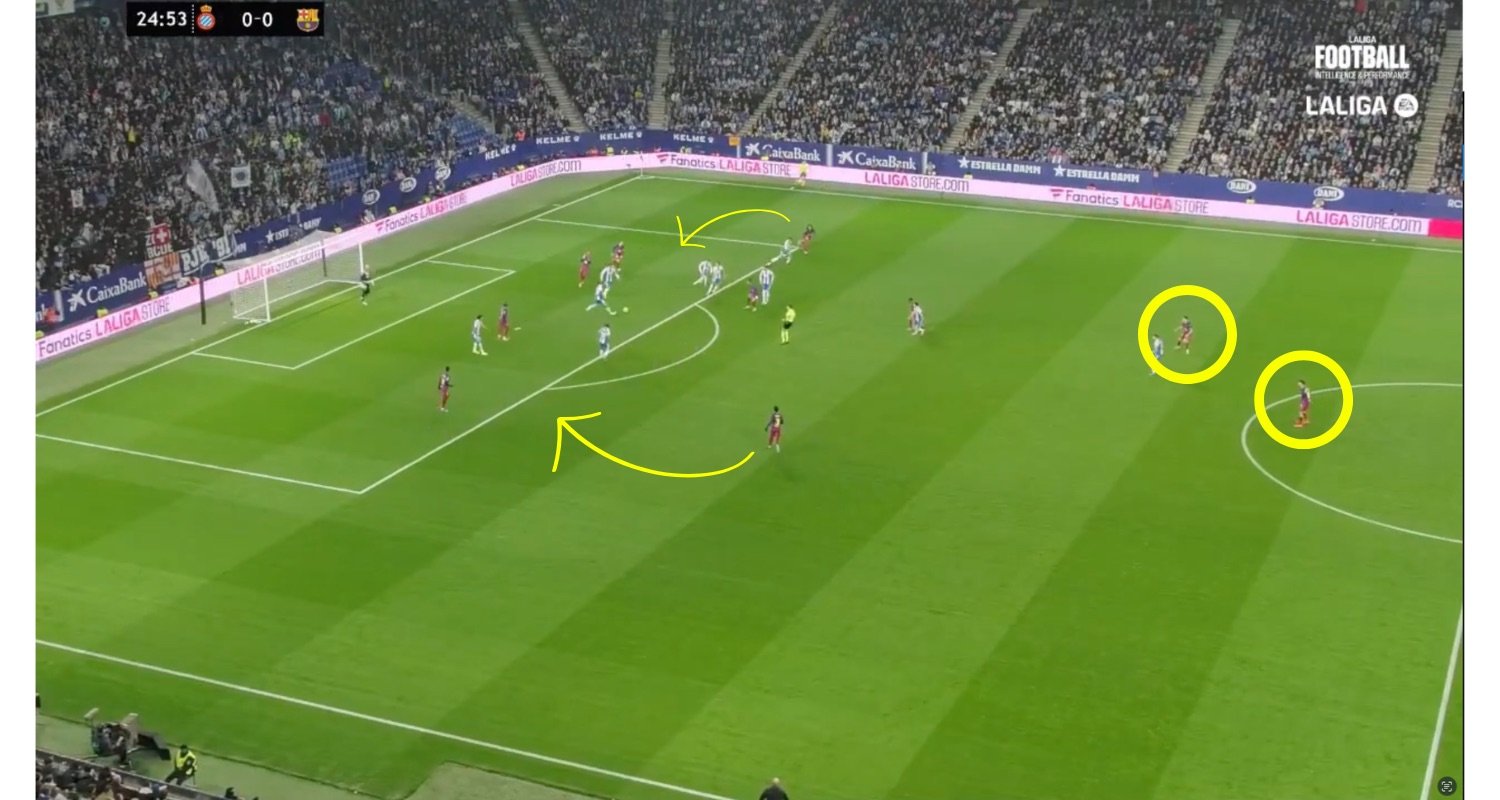
Our Pace Rating measures not how one team plays, but how both they and their opposition play in a match. It identifies teams that do not just attack themselves but also leave room for their opponents to attack as well.
To keep the rating fair, we look at both a team's raw numbers and how those numbers compare to their own league environment. That helps prevent teams in naturally high-pace leagues from being inflated just because their league plays open football.
The best example would be Hansi Flick's Barcelona, who rank 7th out of 411 teams for Pace. You can see in the image above how they love to commit players forward when attacking, leaving only 2-3 players back while both fullbacks are pushed high near the 18-yard box.
Also with their controversial high line, Barcelona matches usually lead to very high-pace and high chance-creation games even against inferior opposition.
AGIX
Our AGIX rating is fairly simple. It measures which teams come out of the gate with attacking pressure.
One of the most frustrating parts of football betting is waiting for that first goal. Some teams like to ease their way into a match, while others seem content with a 0-0 for as long as possible.
This rating identifies the teams that are on the front foot from the moment the whistle blows. A perfect example is PSV Eindhoven. Maybe it is because the Eredivisie is relatively easy for them, but there is zero hesitation in the way they play.
They start every game like it is the 75th minute and they need a winner, leading them to record the most first-half goals in the Eredivisie at 2.15 per match.
NEC
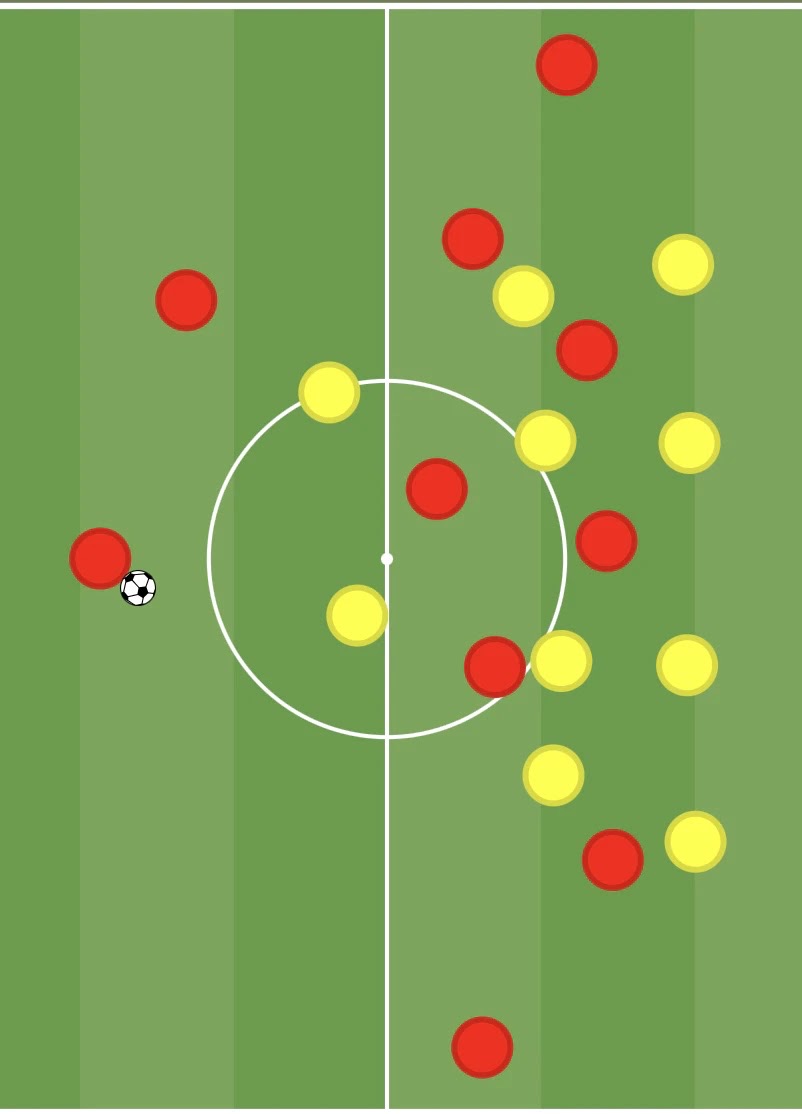
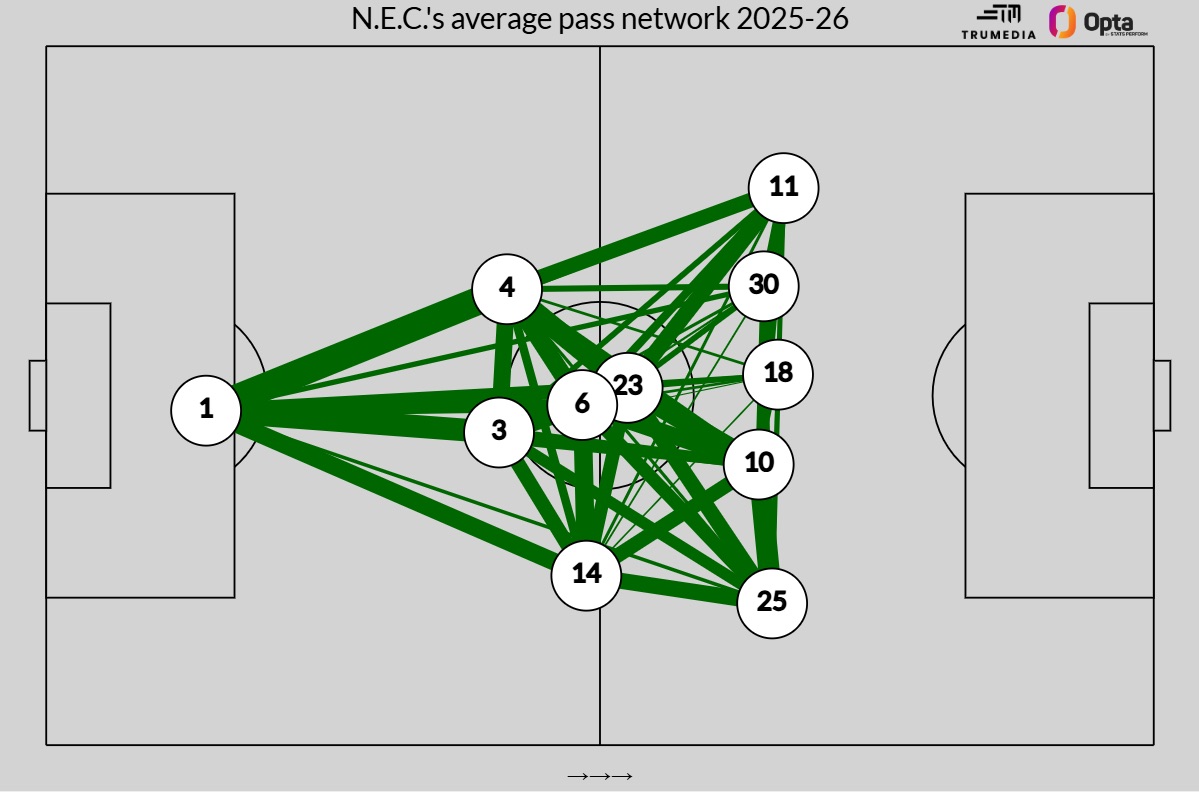
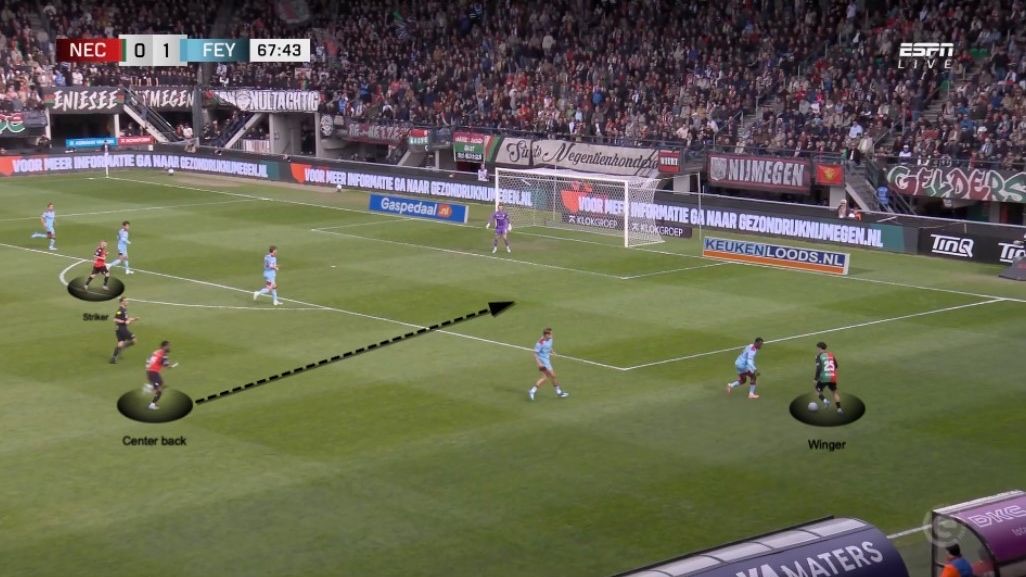
Our NEC rating is based on teams with the highest attacking intent and is named after the team with the most attacking intent this season, NEC Nijmegen.
Unlike our Pace Rating, which can be correlated, this index looks solely at the team itself rather than both the team and its opponent. When NEC enters a match, they seem to have no intention other than scoring as many goals as possible.
They are the epitome of Johan Cruyff's famous quote: "I'd rather win 5-4 than 1-0." Even when they are leading 2-1 or 3-1 late in a match, they are still pushing for the final dagger rather than protecting their lead.
A lot of this comes down to their manager, Dick Schreuder, who arrived this season and guided NEC to one of the best campaigns in the club's history, including qualification for the Champions League and a cup final appearance.
In the images above, you can see their extremely unique shape in possession. Their wing-backs are actually natural wingers rather than traditional full-backs, allowing them to push high up the pitch and create a front five. As if that was not attacking enough, they will often push a centre-back into midfield, creating overloads and completely outnumbering the opposition when attacking.
When watching NEC play, it feels like every attack is their last. They take risks that most teams would not even consider, and whether it succeeds or fails, you cannot help but admire the commitment to their attacking philosophy.
How to use our Pace Score?
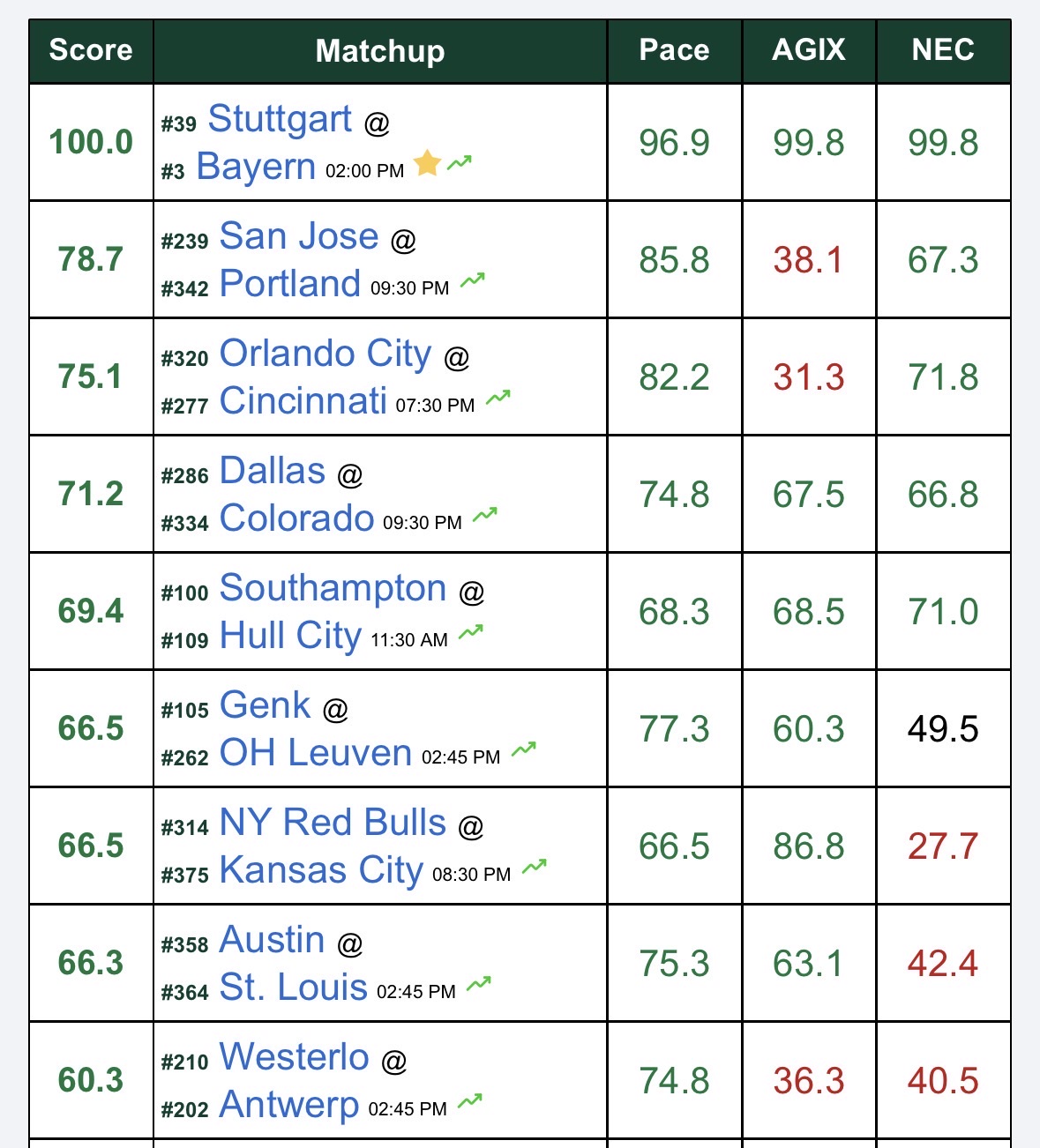
Our Pace Score is measured on a scale of 0-100, with 0 representing the worst goal environment and 100 representing the best.
It is primarily designed for over betting. From my experience using it this season, one of three things almost always happens: the over hits, there are lots of corners, or both.
I have never seen a high Pace Score matchup produce neither goals nor corners.
The three highest Pace Score matchups we had this season were Stuttgart vs Bayern Munich, NEC vs PSV, and FC Thun vs Young Boys.
While no metric is perfect, high Pace Score matchups consistently produce the type of open, chaotic environments that lead to goals.
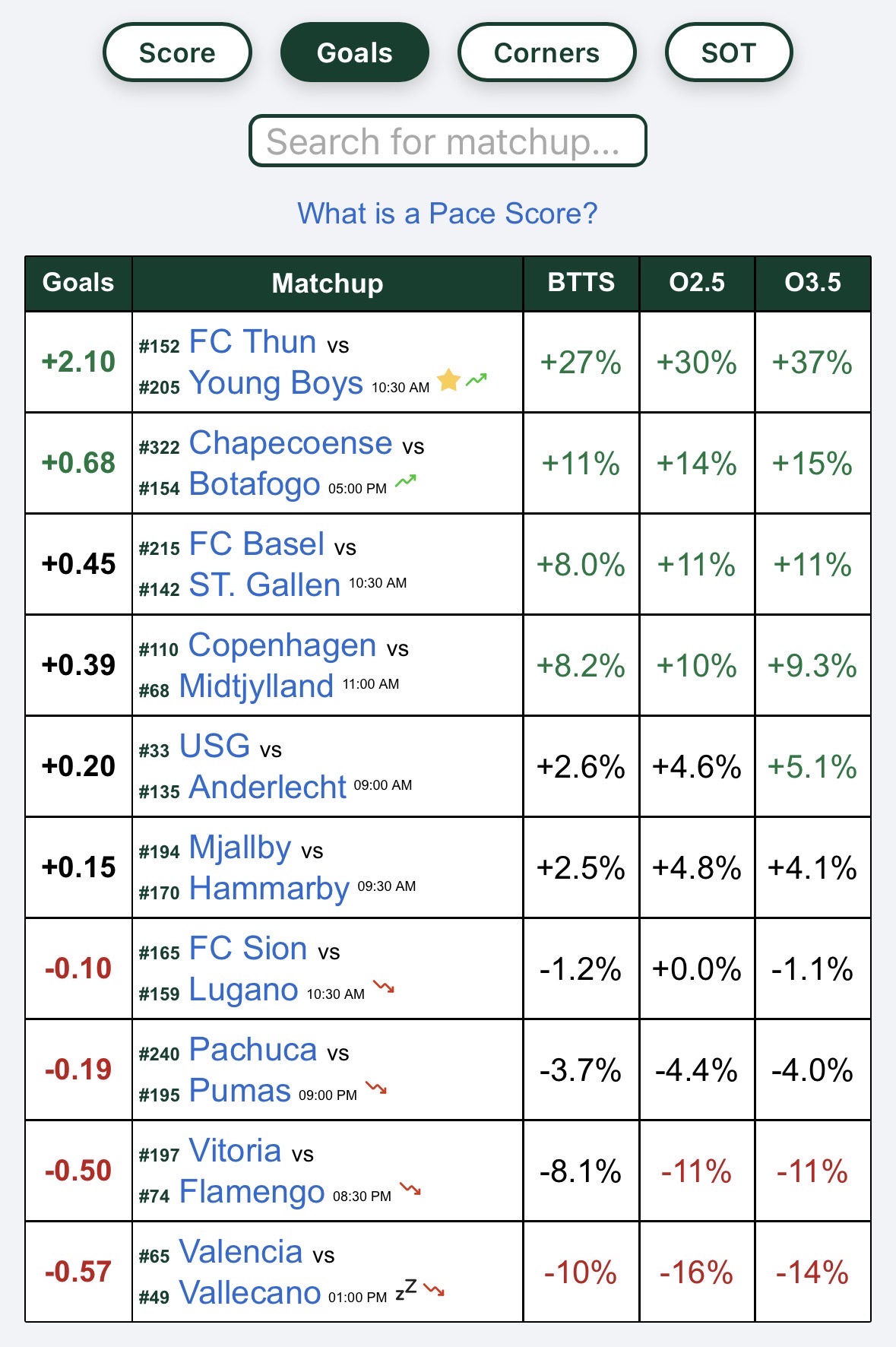
This is a good example of how I want people to read the Pace Score tables. The baseline after roughly 4,000 matches is around 2.9 goals per match. So when FC Thun vs Young Boys shows +2.10 goals, it does not mean I am blindly saying the match will finish with exactly 5 goals. It means that matches with a similar pace profile have produced about 2.10 more goals than the normal baseline.
That is why the BTTS, Over 2.5, and Over 3.5 columns matter too. They show whether the same type of matchup has historically cleared those markets more often than the average game. In this example, similar profiles are way above baseline: BTTS is up 27%, Over 2.5 is up 30%, and Over 3.5 is up 37%.
So the idea is not to bet something just because the number is green. The idea is to quickly see what kind of game environment the matchup is pointing toward. If the pace profile says goals, corners, and shots on target are all above baseline, then that is a match I want to look at much deeper.
Pace Score History
View the full Pace Score history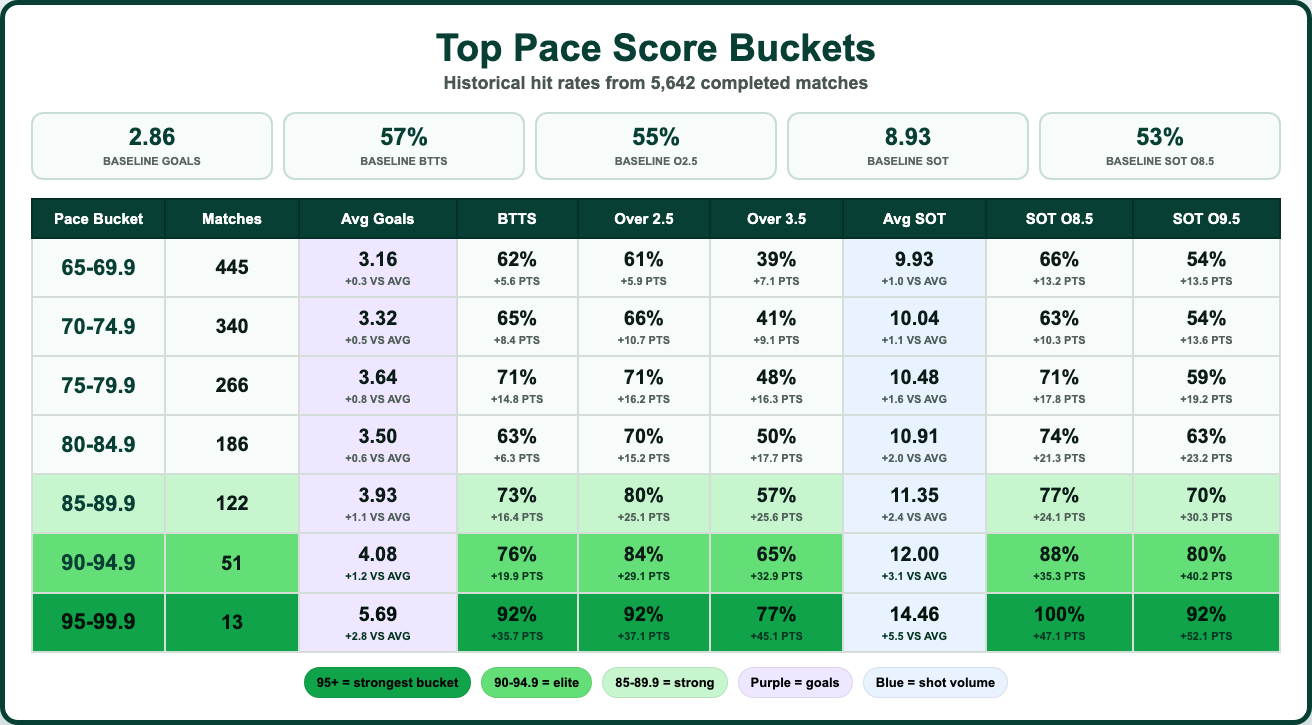
This is the historical side of the Pace Score. Instead of only looking at today's matchup, I also want to know what has happened when previous matches had a similar Pace Score.
The baseline across the sample is around 2.86 goals, 56.6% BTTS, and 8.93 shots on target. Once the Pace Score gets into the elite ranges, those numbers start separating from the average match in a real way.
For example, the 90-94.9 bucket has averaged 4.08 goals, hit Over 2.5 at 84.3%, and produced 12.0 shots on target. That is not saying every high pace match will explode, but it shows why these are the games I care about first.
The very top bucket is the most extreme, but also the smallest sample. So I do not treat it like a guarantee. I treat it like a signal saying this matchup belongs in the highest-risk, highest-upside attacking environment on the slate.